A Day in the Life: The Everyday Gambia
From the morning commute and breakfast from a roadside vendor to work, university and the journey home, everyday life offers another way to discover The Gambia through the routines of the people who keep the country moving.
The day begins early
Before many offices have opened their doors, much of The Gambia is already awake.
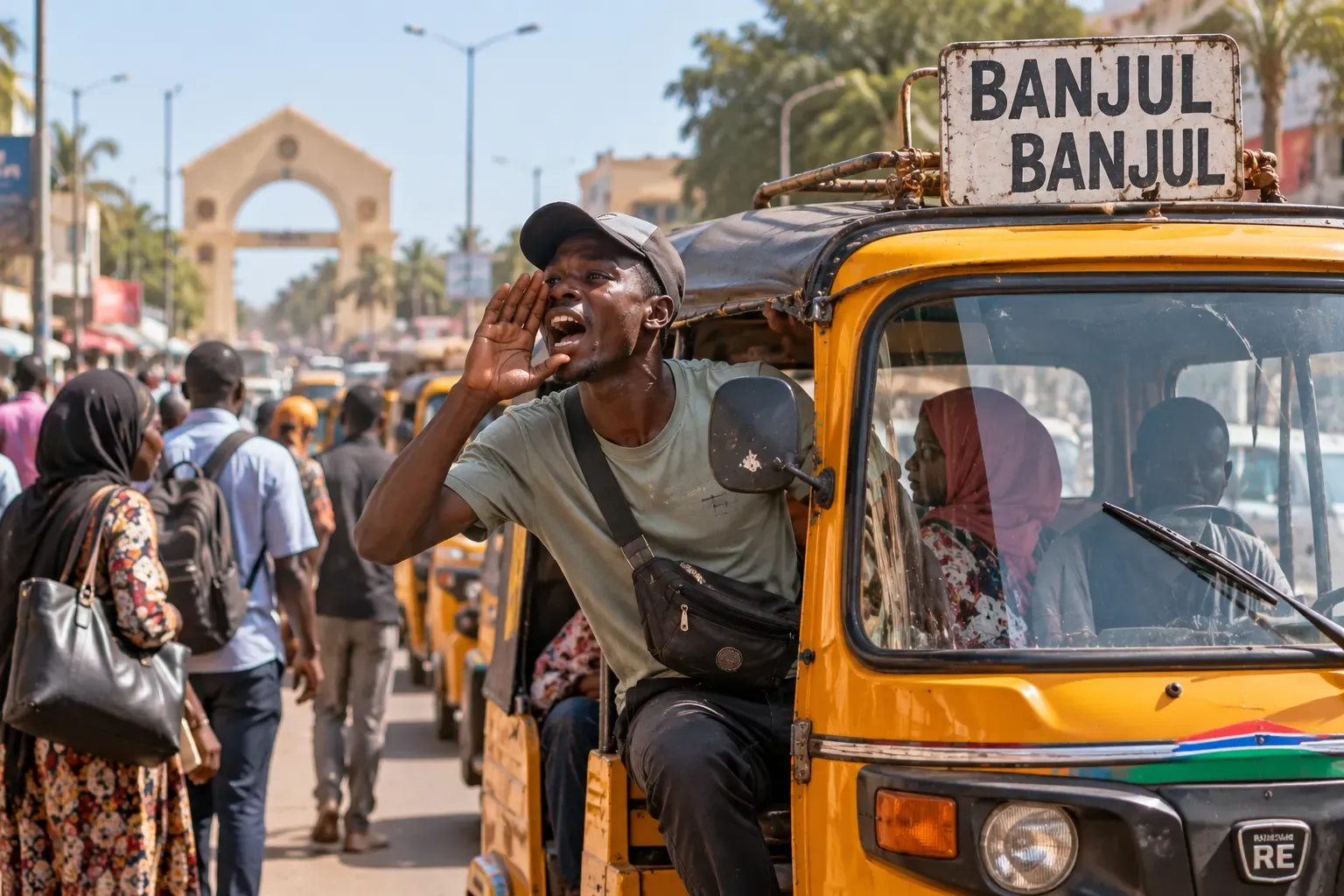
In homes across the Greater Banjul Area, alarms ring, children prepare for school and workers begin making their way towards the main roads. For many people, getting to work does not mean simply getting into a private car and driving directly to the office.
It can mean walking from home to the nearest junction, waiting for a shared taxi, boarding a gele-gele minibus, changing vehicles along the way and continuing the journey with dozens of other commuters doing exactly the same thing.
The morning commute is part of everyday Gambian life.
Drivers call out destinations. Passengers squeeze together. Conversations start between people who may not know each other. Traffic builds as workers, traders and students all make their way towards offices, shops, markets, schools and businesses.
Breakfast on the way
There may not be time for breakfast at home.
Fortunately, breakfast is often waiting along the road.
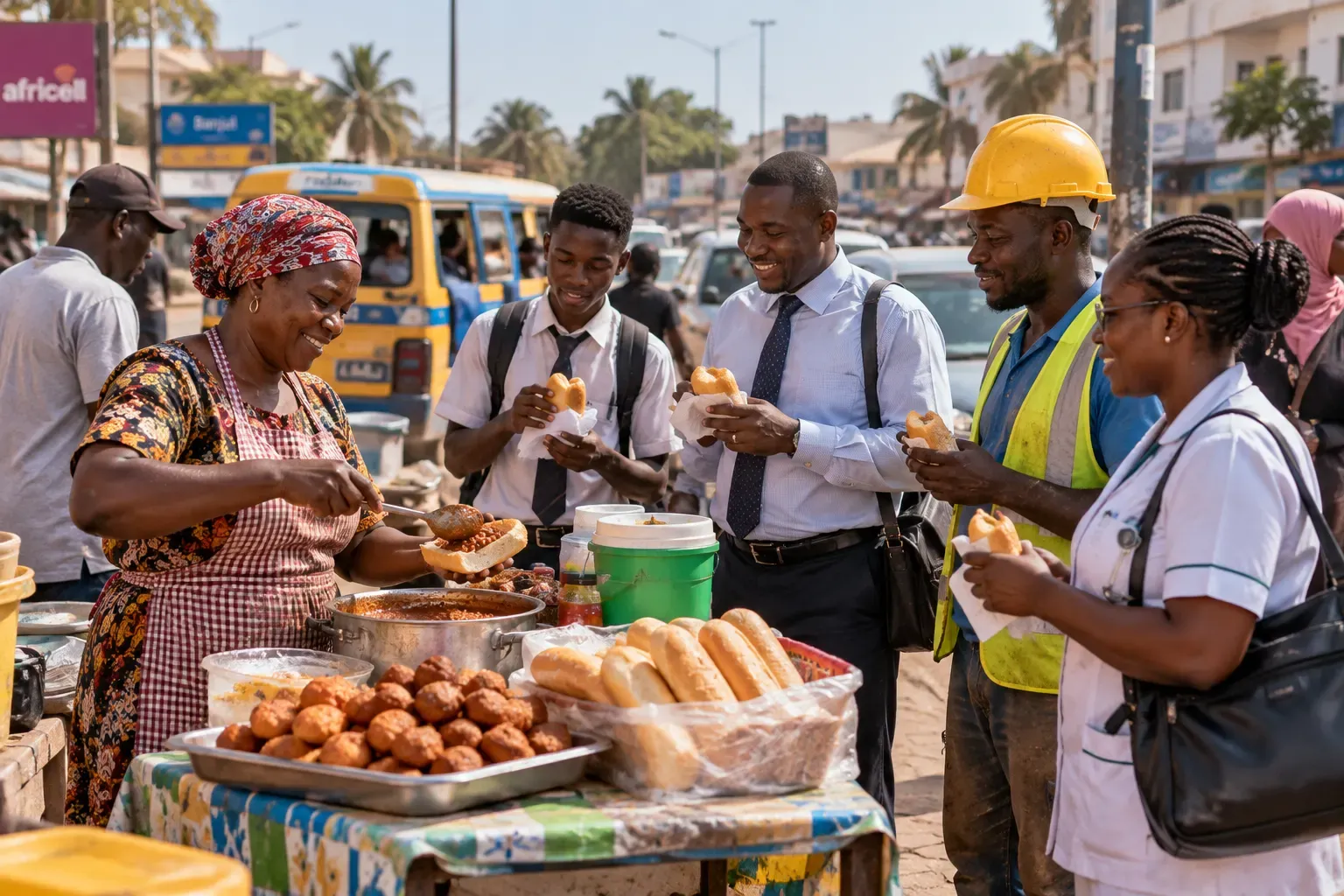
Small food vendors serve workers and students beginning their day. A simple loaf of bread can be filled with nyebeh, beans prepared as a filling meal, or akara, fried bean cakes served inside bread.
It is inexpensive, filling and convenient.
Someone heading to an office may be standing beside a university student, a construction worker or a taxi driver—all buying breakfast from the same vendor before continuing with their day.
These small roadside businesses are themselves an important part of everyday life. Behind every table or food stall is another person earning a living, supporting a household and participating in the country’s informal economy.
Earning a living
By eight or nine in the morning, another Gambia takes over.
Offices begin filling. Shops open. Mechanics are already working. Market traders arrange their goods. Construction workers arrive on site. Nurses and healthcare workers change shifts. Teachers enter classrooms. Drivers continue moving passengers around the country.
There is no single experience of being a “Gambian worker.”
Some people work in government institutions or private companies. Others operate small businesses, sell goods in markets, work in tourism and hospitality, drive taxis, practise trades or create their own employment.
For many, the working day is about something straightforward: earning a living and providing for the people who depend on them.
Work is not always the end of the day
For some young Gambians, leaving work does not mean going home.
It means going to class.
A worker may spend the day at an office and then travel to university or another training institution in the evening, trying to improve their qualifications while continuing to earn an income.
The commute begins again.
A shared taxi. A gele-gele. Traffic. A quick meal. Then lectures, assignments and conversations with classmates before eventually heading home.
It makes for a long day, but it reflects something visitors do not always see when they encounter The Gambia primarily as a holiday destination: the ambitions and routines of a young population trying to build careers and create opportunities for themselves.
And tomorrow, it begins again
By evening, the roads are busy in the opposite direction.
Workers return home. Students leave classes. Shops begin closing while food vendors prepare for the evening crowd. Some people stop to buy dinner or something for the family before making the final journey home.
Tomorrow, much of it will happen again.
The commute. The roadside breakfast. The conversations. The work. The studies. The small businesses. The traffic. The effort to make something of another day.
There are grand ways to introduce a country—through its history, landscapes, institutions and monuments.
But sometimes the best way to understand a place is much simpler.
Wake up with its people. Take the journey to work. Buy breakfast from the woman by the roadside. Sit in traffic. Watch people earn their living. Follow a student from the office to an evening lecture.
That, too, is The Gambia.