The Gambia Advances Social Protection as New In-House System Targets Informal Workers
The Gambia's Social Security and Housing Finance Corporation reports savings of D51.8 million through the in-house development of a new social security system aimed at extending coverage to informal sector workers.
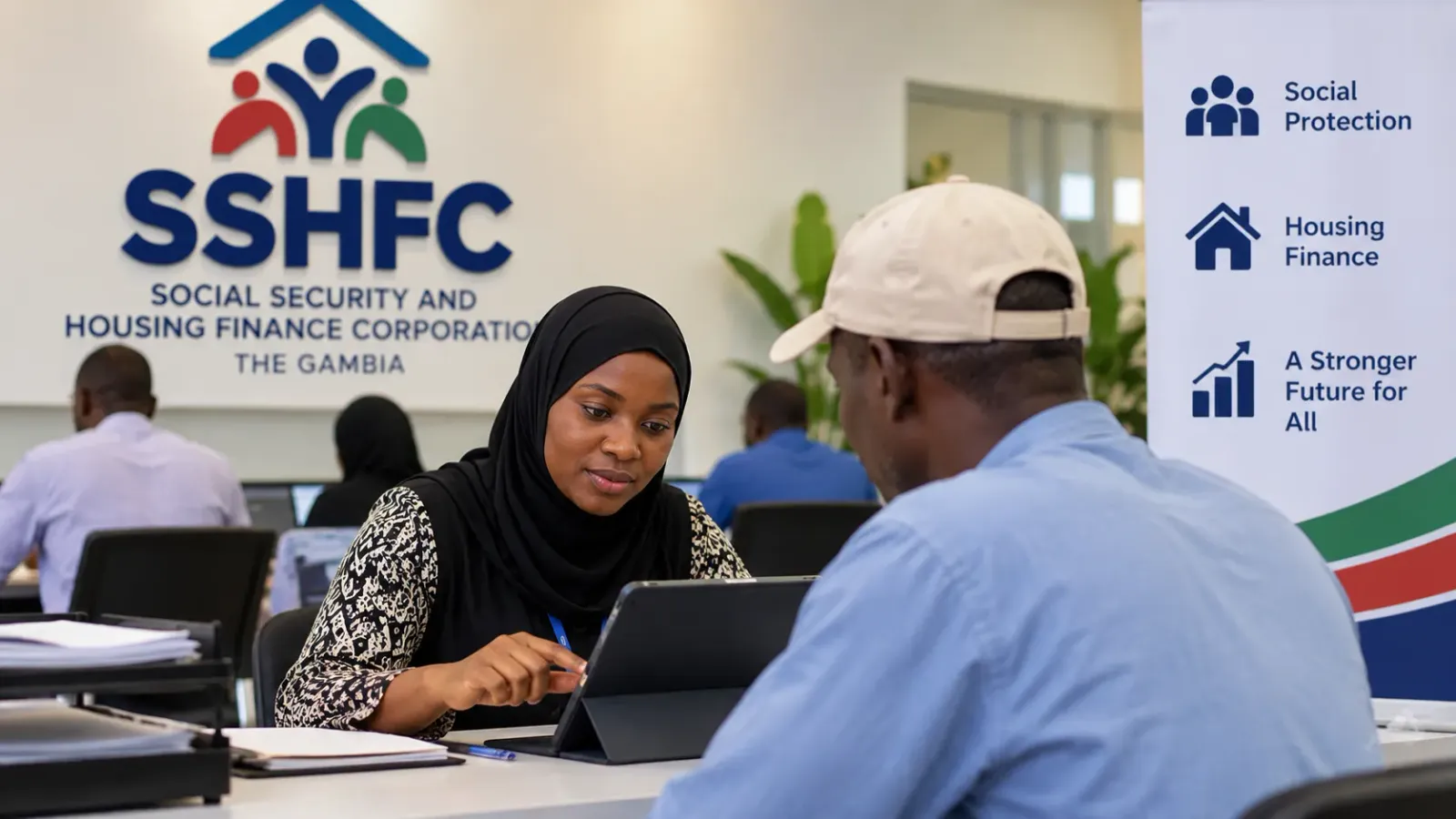
Banjul, The Gambia — The Social Security and Housing Finance Corporation (SSHFC) has reported savings of approximately D51.8 million following the development of an in-house digital system designed to extend social security services to informal sector workers.
According to a report published by The Standard on 12 October 2026, the initiative, known as Taye Sama, was developed using internal technical expertise rather than relying on external consultants.
The project seeks to address a longstanding challenge in The Gambia’s social protection system: the limited coverage of workers operating outside formal employment arrangements.
Expanding Social Security Coverage
The report cites the 2026 Labour Force Survey, indicating that approximately 85.8% of The Gambia’s workforce operates in the informal economy.
This includes traders, farmers, artisans, transport workers and other self-employed individuals who may lack access to conventional employment-based social security arrangements.
The new system is intended to introduce accessible registration, contribution management and digital services for these workers.
Its planned features include mobile payment integration, digital registration, member self-service facilities and improved administrative reporting.
Institutional Efficiency and Local Expertise
The reported D51.8 million saving highlights the potential financial benefits of developing technical solutions within public institutions.
Beyond cost savings, the initiative illustrates the importance of strengthening local professional capacity, improving digital administration and reducing dependence on external technical services.
The programme remains under development, with a pilot phase intended to assess its effectiveness before wider implementation.
Wider Development Significance
Expanding social protection to informal workers could contribute to greater financial security, economic inclusion and long-term institutional development.
For The Gambia, the initiative represents an important effort to adapt public services to the realities of the country’s labour market.
Its long-term impact will depend on successful implementation, affordability, public participation and the accessibility of services to workers across the country.