Hungary Beneath the Surface: A Country of Thermal Waters
Beneath Hungary lies one of the country's most remarkable natural resources: thermal water. From Budapest's historic bathhouses to spa towns around the country, bathing culture has developed over centuries into an enduring part of Hungarian life, architecture and tourism.
Hungary Beneath the Surface: A Country of Thermal Waters
When people first imagine Hungary, they may picture the Hungarian Parliament Building, the Danube, Budapest or Lake Balaton.
But one of Hungary’s most distinctive characteristics is actually hidden underground.
Hungary is particularly rich in geothermal and thermal waters, and this geological feature has influenced the country’s culture, health traditions, architecture and tourism for centuries.
For a visitor from The Gambia, the idea of spending time outdoors in steaming thermal water while the surrounding air is cold may initially seem unusual. In Hungary, however, it is part of a bathing tradition with very deep historical roots.
Why does Hungary have so much thermal water?
Hungary lies within the Pannonian Basin, where the Earth’s crust is comparatively thin and geothermal heat reaches closer to the surface.
As groundwater travels through underground rock formations, it can be naturally heated before returning toward the surface.
This geological setting has given Hungary extensive geothermal resources and numerous thermal and mineral-water sources.
It also helps explain why thermal baths are found not only in Budapest but across the country.
Budapest: a capital famous for its baths
Budapest is particularly associated with thermal bathing.
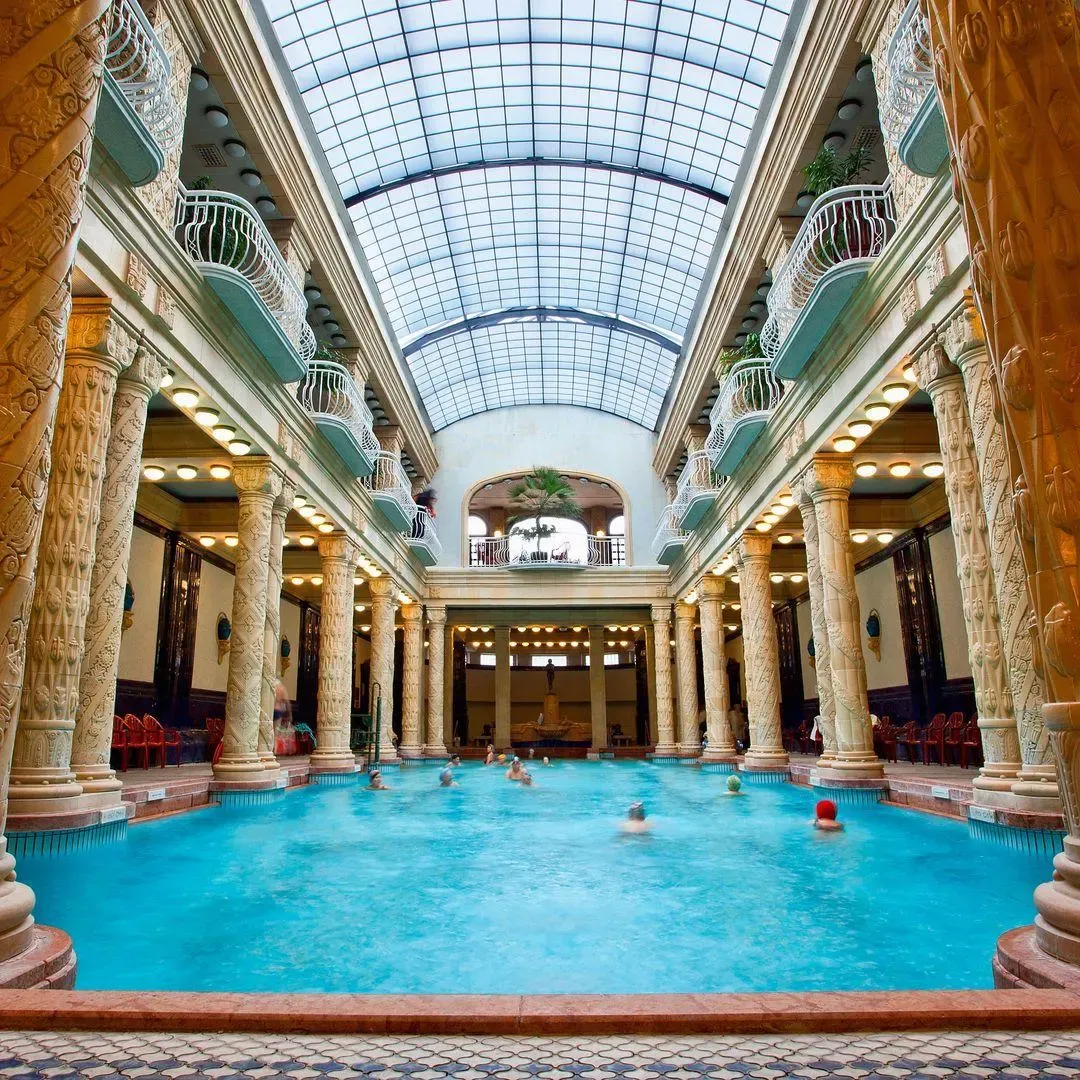
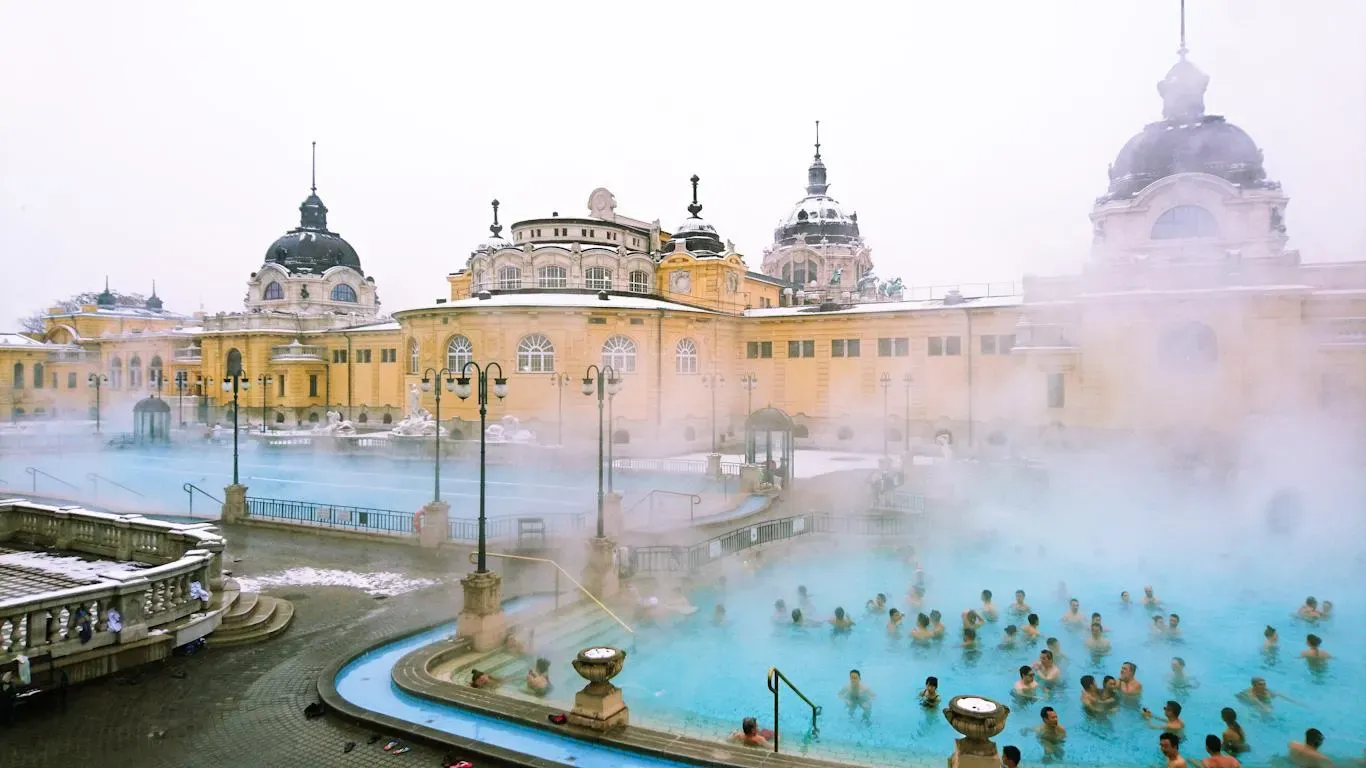
Among its best-known bath complexes are Széchenyi Thermal Bath, with its large outdoor pools, and the historic Gellért Baths.
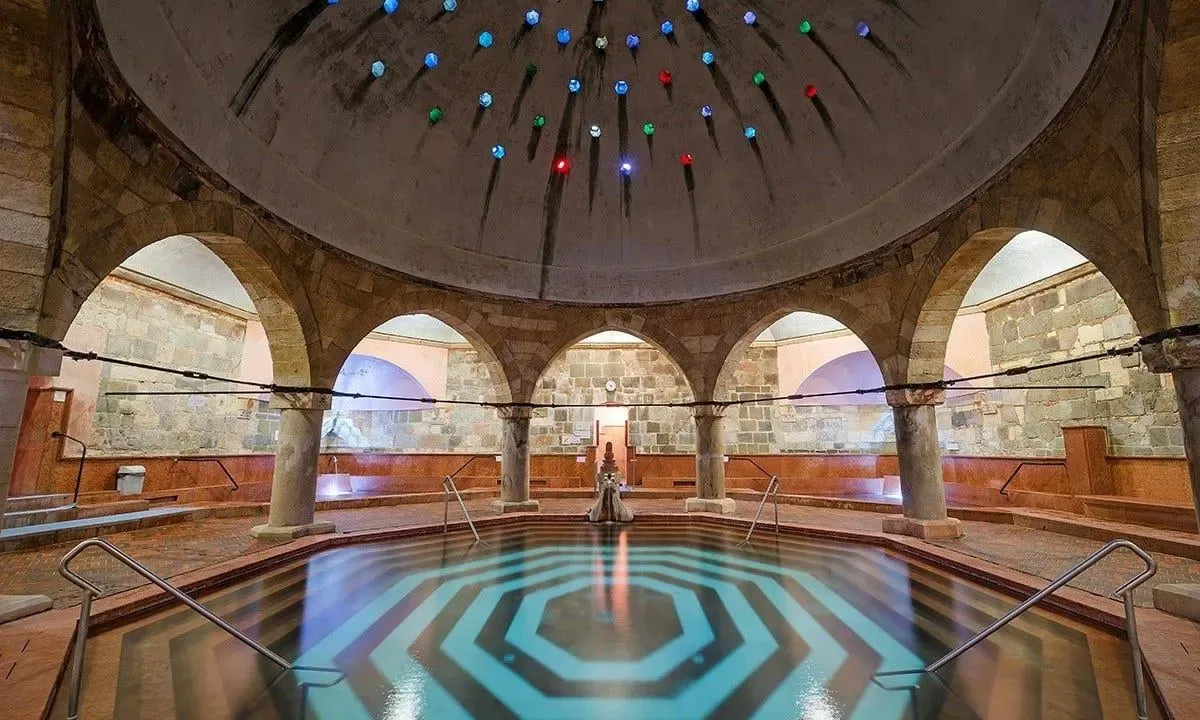
Another remarkable example is Rudas Bath, whose history reflects the period of Ottoman rule in Hungary.
That history matters because Budapest’s bathing culture was not created in a single era. Roman settlement, medieval Hungary, Ottoman influence and later Hungarian development all contributed different layers to the tradition.
Imagine this as a Gambian visitor
It is January.
The temperature outside may be close to freezing. You are wearing a heavy coat, something that may already feel unfamiliar if you have recently arrived from Banjul.
Then you enter a thermal-bath complex.
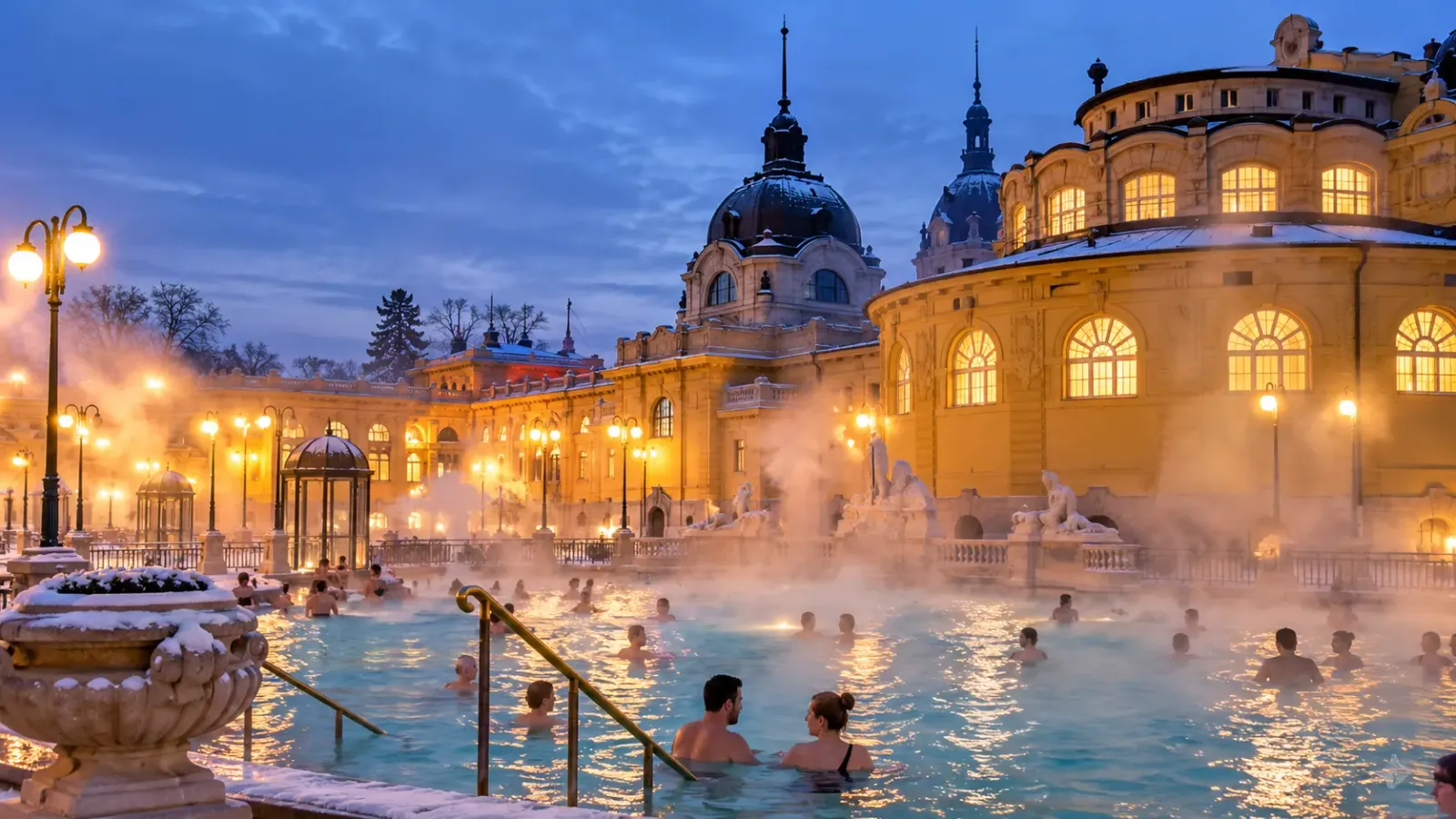
A short time later, you can be sitting in a large outdoor pool of naturally heated water while steam rises around you into the cold Budapest air.
Around you, people may be talking, relaxing or even playing chess in the water.
It is one of those experiences that immediately demonstrates how different climates and environments can produce very different traditions.
More than Budapest
Hungary’s thermal culture extends far beyond the capital.
One of the country’s most unusual natural attractions is Lake Hévíz, near the western end of Lake Balaton. Hévíz is internationally known for its naturally warm thermal lake and long-established bathing culture.
Other Hungarian towns and cities have also developed around thermal and medicinal waters, making spa tourism an important feature of domestic and international travel within the country.
For someone exploring Hungary beyond Budapest, visiting these places offers a very different view of the country.
Bathing as part of social life
What makes Hungarian thermal culture particularly interesting is that baths are not simply historical monuments.
They remain functioning spaces.
People visit to relax, socialise, swim and enjoy the thermal environment. Some facilities also provide treatments and wellness services, although claims about specific medical benefits should be distinguished from the simple recreational experience of thermal bathing.
This mixture of history and ordinary contemporary life is part of what makes the baths interesting.
A visitor isn’t merely looking at something Hungarians once did centuries ago.
The tradition is still alive.
Architecture above, geology below
Hungary’s baths also tell two stories simultaneously.
Below ground is the geological story: heat, rock and water.
Above ground is the human story: architecture, engineering and generations of people finding ways to use that natural resource.
Some bathhouses are grand architectural landmarks. Others are modern wellness complexes. Together they show how a geological characteristic can become part of a country’s identity.
Another Hungary worth discovering
Hungary cannot be understood only through Budapest’s Parliament, its universities or its famous monuments.
Sometimes understanding a country means noticing the ordinary traditions shaped by its geography.
In The Gambia, the River Gambia and Atlantic coast have profoundly influenced settlement, livelihoods and everyday life.
In Hungary, the landscape has shaped people differently.
And beneath that landscape lies warm water that Hungarians have been finding ways to enjoy for centuries.
Sometimes, to discover Hungary, you have to look beneath the surface.