The Gambia Journal: Development, Enterprise and International Cooperation
This edition explores developments in tourism, agriculture, education, health research and regional cooperation, alongside women’s enterprise, youth climate action and public finances. It also examines international cooperation on asset recovery and selected public notices relevant to businesses and professionals, offering readers a broad view of The Gambia’s current priorities.
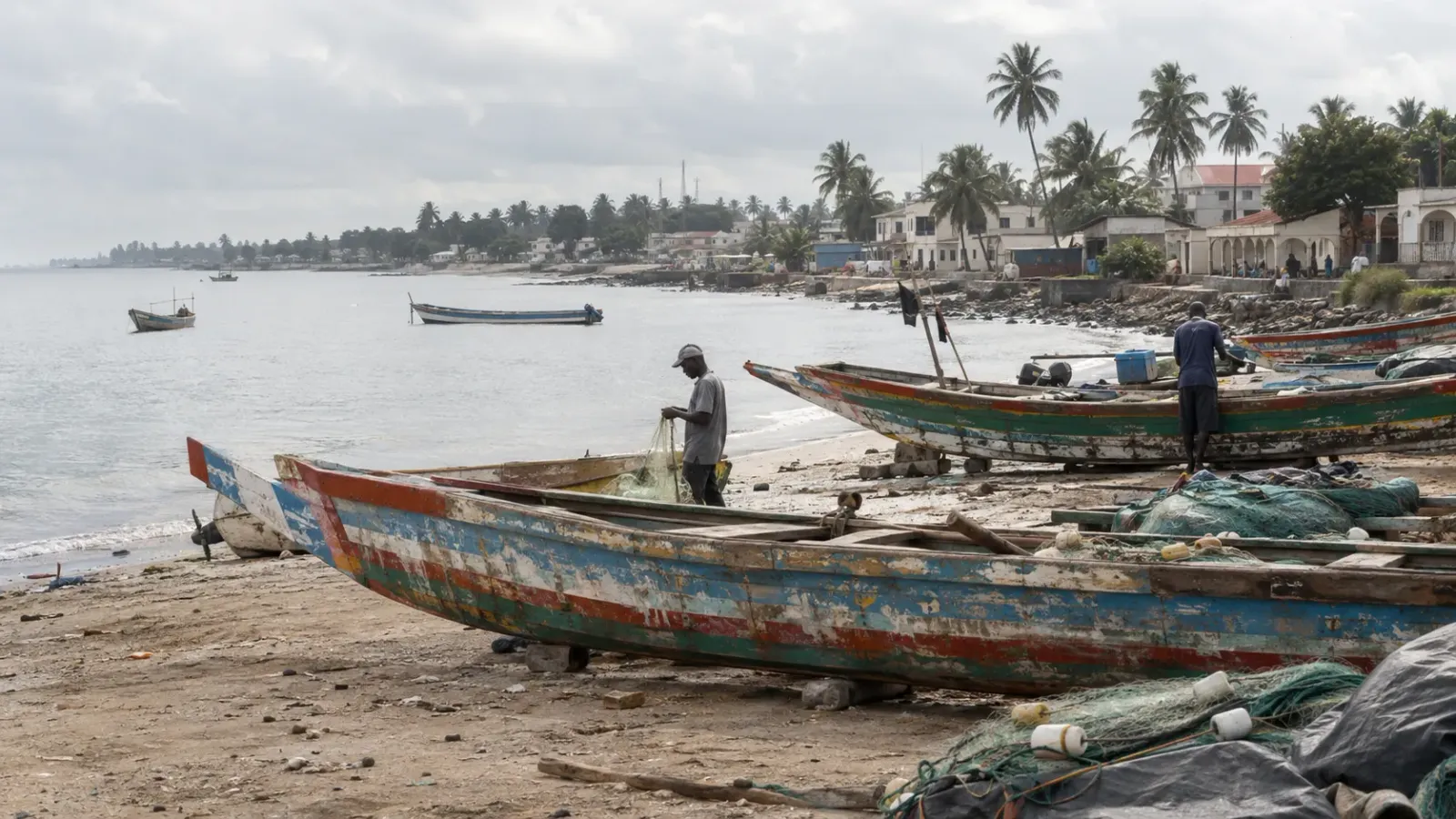
A visitor arriving at Banjul’s port, a trader transporting fish from Gunjur, a student seeking tuition support and an entrepreneur learning to package her products all encounter different parts of the same development story.
The Gambian newspapers reviewed for this edition bring these experiences into focus. Alongside national announcements are accounts of community initiative, regional dialogue and international partnerships. They reveal both opportunities and the practical challenges involved in turning investment, training and policy into improvements in everyday life.
For Hungarian visitors, businesses, institutions and friends of The Gambia, this journal offers an introduction to developments across the country.
Tourism and coastal access
The arrival of the expedition cruise ship SH Diana at Banjul Sea Port on 18 September brought attention to The Gambia’s place in West African cruise itineraries. The Point reported that the Swan Hellenic vessel carried 138 passengers and was welcomed by the Gambia Tourism Board in partnership with Gambia Tours.
Cruise visits can connect international travellers with local guides, transport operators, craft producers and cultural attractions. Their value to the wider economy depends partly on how effectively excursions involve local businesses and communities.
On the coast, the inauguration of the 4.5-kilometre Gunjur Seaside Road on 19 September highlighted the relationship between infrastructure and livelihoods. The road connects the Brusubi–Kartong Highway to the seaside, improving access to an area serving fishing, trade, tourism and residential communities.
Foroyaa’s coverage included a fish trader’s account of the difficulties caused when vehicles could not reach the landing site. Her experience gives the project a practical meaning: reliable access matters to getting products to market, reaching customers and reducing disruption during difficult weather.
Agriculture: production, processing and sustainable farming
Agriculture coverage focused on both commercial development and the conditions facing farmers.
Foroyaa reported that the Ministry of Agriculture had provided D300 million towards recapitalising the National Food Security, Processing and Marketing Corporation. The report also examined lessons from a parliamentary study visit to Senegal’s SONACOS, including storage, quality control, processing, packaging and market access.
These activities determine how much value producers and local businesses can retain after a harvest. Investment in production needs complementary systems that preserve quality and connect goods with buyers.
A separate ActionAid forum considered agroecology and equitable access to fertiliser. Participants discussed rising input costs, soil degradation and farming practices such as composting and intercropping.
Together, the reports identify a shared challenge: increasing agricultural income while protecting the resources on which future harvests depend.
Women’s enterprise and practical skills
A training programme in Kanifing offered a more immediate view of enterprise development. According to Foroyaa, the Association for the Promotion of African Integration organised training for approximately 120 women, with expertise from Senegal.
The programme covered soap and detergent production, packaging and business management. Participants discussed how practical skills could support household income, while also identifying the need for finance and equipment.
The distinction between completing a course and establishing a viable business is important. Entrepreneurs need to understand their costs, maintain product quality, reach customers and manage cash flow. Training becomes more valuable when these tasks receive continued attention.
The cross-border involvement also illustrates how regional cooperation can take place through direct exchanges between practitioners and small businesses.
Education: results, learning time and tuition support
Foroyaa reported The Gambia’s highest GABECE pass rate since 2021, citing Ministry of Basic and Secondary Education figures. It stated that 54.5% of candidates achieved an aggregate score of 42 or below.
The coverage also acknowledged regional differences and the need to support learners who had not achieved the required standard. Alongside the results, The Point reported Education Minister Dr Habibatou Drammeh’s call to protect classroom learning time by reducing non-essential interruptions.
For students entering or continuing university, the Students Revolving Loan Scheme’s first 2026/2027 application cycle provides another development to follow. Public announcements describe interest-free tuition loans for eligible undergraduate students at the four participating public universities, with applications closing on 30 September 2026.
Applicants should follow the scheme’s official instructions and assessment requirements. Eligibility does not automatically guarantee an award.
Health: research partnerships and sustainable financing
The launch of WANETAM-4 highlights The Gambia’s role in international scientific cooperation.
The new five-year programme is coordinated by MRC Unit The Gambia at the London School of Hygiene & Tropical Medicine and funded through the EU–Africa Global Health EDCTP3 partnership. It supports infectious-disease research, scientific training and stronger health-research capacity across West Africa.
Its significance extends beyond individual studies. Developing researchers, strengthening institutions and connecting research with public-health priorities are central to the programme’s approach.
The additional newspaper pages also contain a consultancy notice from the National Malaria Elimination Programme, working with PATH/MACEPA. It seeks expertise to develop a resource-mobilisation strategy and investment case for the National Malaria Elimination Strategic Plan 2026–2030.
The notice illustrates the financial planning behind public-health programmes: identifying funding sources, assessing financing needs and presenting a credible case for sustained investment. Its current application status requires confirmation with the issuing organisations.
Public finances and institutional performance
Economic reporting presented revenue growth alongside rising expenditure pressures.
According to The Point’s account of the mid-year budget review, revenue excluding project grants reached D15.35 billion in the first half of 2026, an increase of 8% over the corresponding period in 2025. Debt-interest payments reached D3.10 billion, up 18%.
These figures help explain the attention given to revenue administration, spending priorities and the effectiveness of public investment.
The papers also carried terms of reference for an independent mid-term review of The Gambia’s component of the Harmonizing and Improving Statistics in West and Central Africa project. The proposed review examines implementation, procurement, financial management, results and corrective measures.
Such reviews provide an opportunity to identify delays and adjust implementation while a project is still under way. The publication is a consultancy document, however, and should not be interpreted as evidence that the review has already been completed.
Regional markets: cooperation with consequences for businesses
The inaugural annual conference of the ECOWAS Regional Competition Authority concluded on 17 September at the Sir Dawda Kairaba Jawara International Conference Centre in Bijilo. Participants called for stronger regional cooperation and enforcement of competition rules.
The fuller newspaper report describes a declaration addressing cooperation between competition authorities, digital markets, consumer protection and barriers affecting businesses.
For readers considering regional commerce, the discussion is relevant because market access depends on more than the movement of goods. Administrative procedures, licensing, logistics and competitive conditions also influence whether an enterprise can enter a market and operate effectively.
Hosting the conference additionally demonstrates The Gambia’s role as a venue for regional policy exchange.
Young people bring climate concerns into public debate
Climate action received a strong community focus in The Point’s account of a march held in Abuko on 19 September. Young people, women’s groups and civil-society organisations, organised under Global Platform The Gambia, presented demands to the Ministry of Environment, Climate Change and Natural Resources.
The report describes calls for greater access to climate finance, protection for coastal communities and stronger environmental action. These were proposals advanced by participants, rather than announcements of adopted government policy.
The story connects international climate discussions with local concerns about livelihoods, land and the future of coastal communities. It also highlights young people’s interest in participating in decisions that will affect them over the coming decades.
Asset recovery and support for victims
The French-language newspaper page reports an agreement concerning funds recovered from a property associated with former President Yahya Jammeh.
The United States Department of Justice’s announcement of 18 September confirms that approximately US$2.5 million in recovered proceeds is being returned to The Gambia to compensate eligible victims of the Jammeh regime. It identifies net proceeds of US$2,507,911.73 from the forfeiture and sale of the Maryland property.
This is a concrete example of international cooperation linking asset recovery with victim compensation. The announcement establishes the intended purpose of the funds; it does not establish that individual beneficiaries have already received payments.
The development sits alongside newspaper coverage of efforts to improve women victims’ understanding of, and access to, reparations.
Peace, inclusion and community relationships
Reporting on International Day of Peace activities brought together religious leaders, civil-society representatives and other stakeholders.
At the gathering described in The Point, Caritas-Gambia Director Francis D. Mendy emphasised dignity, dialogue and justice. Representatives of Christian and Muslim institutions spoke about reconciliation and protecting the relationships shared across neighbourhoods, schools and families.
The discussion gives a human dimension to peaceful civic participation. It places responsibility with institutions and leaders, but also with communities and everyday interactions.
Other coverage examined support for vulnerable children, women’s participation and services for persons with disabilities. These reports point to the importance of reaching people whose needs may receive less attention in national economic headlines.
Public notices: selected areas of professional and business activity
The additional pages provide a useful view of demand for goods and specialist services. The National Environment Agency’s published notices include furniture and equipment for the Kafuta National School of Forestry, and expressions of interest concerning patrol and tourist boats under its GEF-6 project.
| Published notice | Deadline printed in the newspaper |
|---|---|
| NEA: furniture and equipment for the forestry school | 25 September 2026 |
| NEA: expressions of interest for patrol and tourist boats | 30 September 2026 |
| National Council for Law Reporting: Administrative and Finance Officer vacancy | 25 September 2026, 12 noon |
These dates are reproduced from the supplied notices. Interested readers should confirm current status, eligibility and submission instructions directly with the issuing institution.
A separate Gambia Bureau of Statistics refurbishment notice carries a 14 September 2026 deadline, already past at this journal’s publication date. It is therefore not presented as an open opportunity.
Youth football brings a shared celebration
The sports pages offered a moment of national pride. The Point reported that The Gambia’s under-17 team defeated Senegal 5–3 on penalties following a goalless final to win the WAFU A regional tournament.
For the young players, regional competition offers experience and visibility. For supporters, it provides a shared celebration that reaches across communities.
Behind the result is the continuing work of developing young talent through coaching, education, facilities and opportunities to compete.
Source note: This journal draws on selected articles and public notices in the supplied 22 September 2026 newspaper editions, supplemented by online reporting and institutional sources. It distinguishes reported developments, proposed activities and published notices. References to external organisations or opportunities do not imply involvement or endorsement by the Office of the Honorary Consul of Hungary.