A Weekend in Budapest
Only have a weekend in Budapest? This two-day guide combines some of the Hungarian capital’s essential landmarks, food, thermal-bath culture and evening atmosphere without trying to squeeze the entire city into 48 hours.
Before you start
Budapest is divided by the Danube into Buda and Pest, and a good first weekend should give you time on both sides.
The city’s public transport system makes this relatively easy. For visitors doing a lot of sightseeing, the 72-hour Budapest travelcard currently costs 5,750 HUF and covers unlimited journeys on most public transport within Budapest. The 100E Airport Express requires a separate fare.
Download BudapestGO before or shortly after arriving. It provides journey planning, live transport information and digital ticket purchases.
Friday evening — Meet Budapest at night
If you arrive on Friday, don’t immediately try to see everything.
Check into your accommodation, have dinner and take an evening walk through central Pest.
Start around Deák Ferenc tér and walk towards St. Stephen’s Basilica (Szent István Bazilika). The Basilica and surrounding Szent István tér are particularly impressive after dark.
From there, continue towards the Danube. Budapest’s historic centre becomes a different city when illuminated at night.
Recommendation: Save some of the major sightseeing for Saturday. Friday evening should simply introduce you to the city.
Saturday morning — Parliament and the Danube
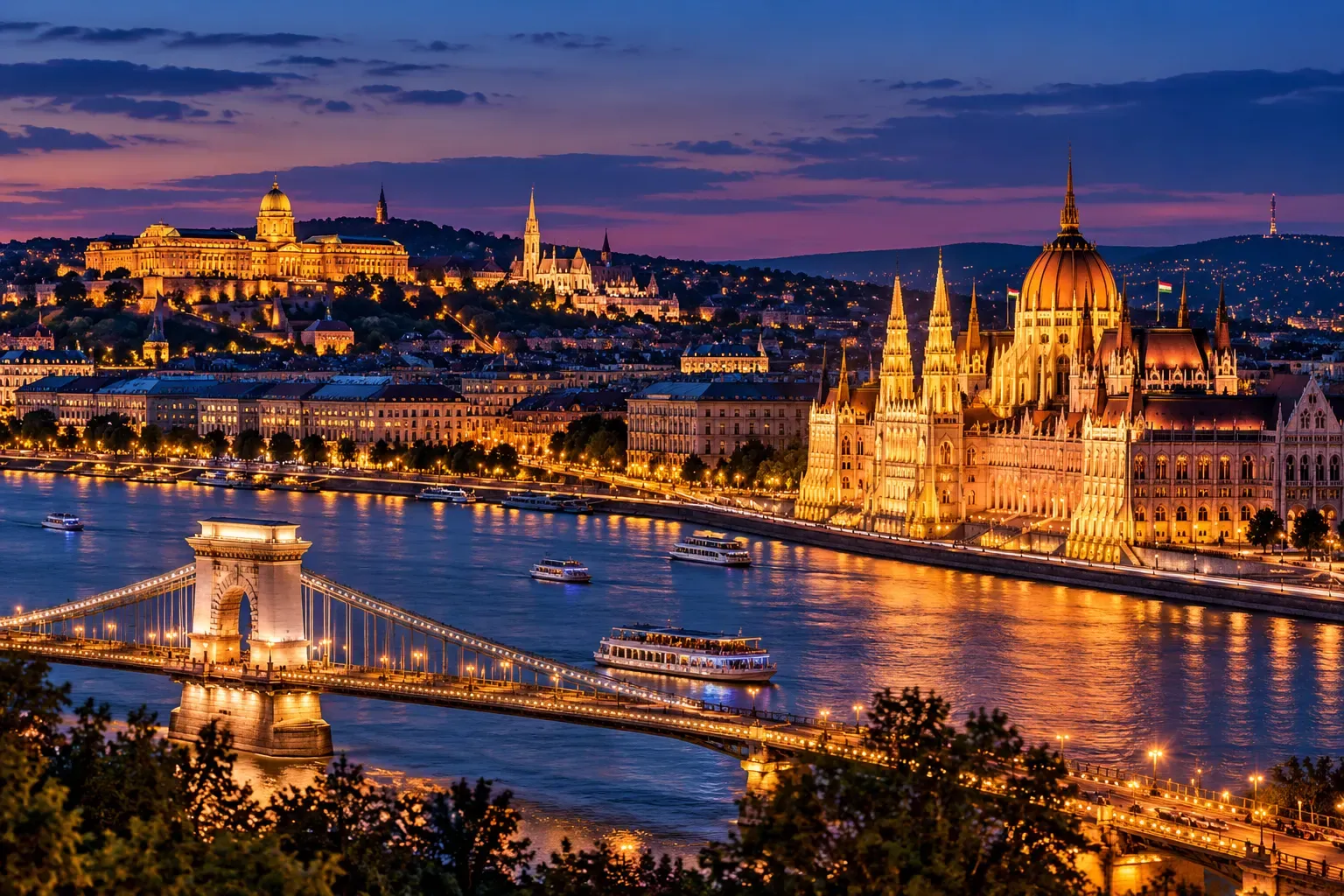
Start Saturday around the Hungarian Parliament Building, one of the defining sights of Budapest.
Give yourself time to walk along the Danube rather than moving immediately to the next attraction. The river is fundamental to understanding the geography of Budapest: Buda rises on one side while much flatter Pest stretches out on the other.
Nearby, you can also visit the Shoes on the Danube Bank memorial, which commemorates victims murdered during the Second World War.
Then head towards St. Stephen’s Basilica if you only saw it from outside the previous evening.
The Parliament, Basilica and Buda Castle District are among the city’s principal visitor attractions recommended by Budapest’s official tourism service.
Saturday afternoon — Cross into Buda
Spend the afternoon on the Buda side.
Make the Buda Castle District your main destination rather than trying to rush through several distant attractions.
Explore the old streets around the Castle, Matthias Church and Fisherman’s Bastion and, most importantly, stop occasionally to look back across the Danube towards Pest.
The elevated position gives you one of the best introductions to Budapest’s layout.
Budapest’s official tourism service recommends allowing substantial time for the Castle District rather than treating it as a quick photo stop.
Recommendation: Wear comfortable shoes. Budapest rewards walking, and the Castle District has cobbled streets and inclines.
Saturday evening — Eat Hungarian
After a full day of sightseeing, slow down.
Find a good Hungarian restaurant and try something beyond the inevitable first encounter with goulash.
Look out for gulyás, paprikás csirke (chicken paprikash), pörkölt, lángos or töltött káposzta (stuffed cabbage), depending on the restaurant and your preferences. Finish with a Hungarian dessert or kürtőskalács, commonly known as chimney cake.
Then take another walk.
Budapest is one of those cities where the journey back to your hotel can become part of the sightseeing.
Sunday morning — Experience Budapest’s thermal culture
Do something distinctly Hungarian on Sunday morning: visit a thermal bath.
Budapest’s thermal-bath culture is one of the characteristics that separates it from many other European capitals. The official tourism service describes Budapest as a spa city and highlights its thermal baths among the city’s major attractions.
Széchenyi Thermal Bath is the famous first-time visitor choice, particularly if you want the experience of outdoor thermal pools surrounded by grand architecture.
Alternatively, consider Gellért, Rudas or Lukács, depending on what is operating and the experience you want when you visit.
Allow a few hours. Don’t turn the thermal bath into another 30-minute sightseeing stop.
Sunday afternoon — Markets, Heroes’ Square or simply wander
Your final afternoon should depend on what interests you.
For history and monumental Budapest, head towards Heroes’ Square and City Park. For food and everyday city life, explore a market. If you’ve already done enough sightseeing, simply choose a neighbourhood, find a café and walk.
Budapest’s official visitor recommendations include City Park, Heroes’ Square, the Jewish Quarter, Parliament, the Castle District and St. Stephen’s Basilica among its principal areas and attractions.
Don’t make the mistake of spending your final hours racing between landmarks just to say you saw them.
If you have time for only five things
For a first weekend, prioritise St. Stephen’s Basilica at night, the Parliament and Danube waterfront, the Buda Castle District, a Hungarian meal, and a thermal bath.
That gives you something of Budapest’s architecture, history, food, geography and everyday culture without turning the weekend into a checklist.
A note for Gambian visitors
If this is your first trip from The Gambia to Hungary, the season matters considerably.
Budapest in autumn or winter can feel very cold if you are accustomed to Gambian weather. Bring proper layers, particularly for evening walks, and don’t underestimate the wind or temperature simply because you will be spending much of the trip in the city.
The other pleasant surprise may be how easy Budapest is to explore without a car. Trams, buses and four metro lines cover much of the city, and BudapestGO can plan journeys using real-time information.
Most importantly, leave some room in your itinerary for Budapest itself.
Sit somewhere. Eat something unfamiliar. Walk along the Danube. Take a tram without treating every minute as sightseeing.
A weekend is not enough to know Budapest—but it is certainly enough to understand why you might want to return.