Welcome to The Gambia
Welcome to The Gambia, one of West Africa’s smallest countries and a place known for its hospitality, cultural diversity and close connection to the River Gambia. This guide gives first-time visitors a practical introduction to arrival, transport, money, communication, local customs and everyday life.
Step by step
- Step 1 — Arrive at Banjul International Airport Most international visitors arrive through Banjul International Airport at Yundum. Before travelling, check the current entry requirements applicable to your nationality, including passport validity, visa requirements and any health-related travel requirements. After collecting your baggage and completing arrival formalities, you can continue to the Greater Banjul Area by hotel transfer, pre-arranged vehicle or local taxi. Visitors should arrange airport pickup in advance where possible, particularly when arriving for the first time or late at night.
- Step 2 — Understand the Greater Banjul Area Despite the name, many visitors to “Banjul” actually stay outside the capital. Banjul is the historic capital, while much of the country’s commercial, residential and tourism activity is concentrated around areas such as Kanifing, Serrekunda, Kotu, Kololi, Bakau, Bijilo and the wider Kombo area. Distances may appear short on a map, but journey times can vary considerably depending on traffic and road conditions.
- Step 3 — Get connected Local SIM cards and mobile-data services are widely available. Visitors can purchase a SIM card from an authorised outlet and select a prepaid voice or data package suitable for their stay. Hotels, restaurants and offices may also provide Wi-Fi, although speed and reliability can vary. For more information, see our separate Mobile Phones and Internet in The Gambia guide.
- Step 4 — Get familiar with the dalasi The national currency is the Gambian dalasi (GMD). Cash remains important for everyday transactions, particularly for taxis, small shops, markets, street vendors and businesses outside major commercial areas. ATMs and card facilities are available in parts of the Greater Banjul Area, particularly around banks, hotels and larger businesses, but visitors should not assume that cards will be accepted everywhere. Use recognised banks or authorised foreign-exchange providers when exchanging money.
- Step 5 — Learn how people move around Public transport is an important part of everyday Gambian life. Shared taxis, minibuses, larger passenger vans and three-wheeled vehicles commonly known as tuk-tuks operate on many routes. Private taxis and vehicle hire are also available. Public transport can be inexpensive but may be unfamiliar to a first-time visitor. For longer journeys, business travel or appointments, arranging transport beforehand may be more convenient. Traffic can become particularly heavy around the main urban corridors during morning and evening periods.
- Step 6 — Experience everyday Gambian food Gambian cuisine reflects the country's West African traditions and its different ethnic communities. Popular dishes include benachin, domoda, yassa, superkanja and different rice, fish and meat dishes. Breakfast can be much simpler. On a typical morning, you may see workers and students buying bread with beans, locally called nyebeh, or bread with akara from roadside food vendors before continuing to work or school. Restaurants range from small local establishments to international restaurants concentrated around the tourism areas.
- Step 7 — Understand everyday etiquette Greetings matter in Gambian society. It is normal to greet someone before beginning a conversation or asking a question. Extended greetings about family, work and general wellbeing are common and are usually expressions of courtesy rather than unnecessary formality. English is the official language and is widely used in government, education and business. Mandinka, Wolof, Fula, Jola and several other languages are spoken throughout the country. The population is predominantly Muslim, alongside Christian and other communities. Visitors should be respectful around places of worship and during religious observances.
- Step 8 — Dress for the climate and setting The Gambia has a warm tropical climate with a dry season and a rainy season. Light, breathable clothing is suitable for much of the year. More formal clothing may be expected for government meetings, diplomatic engagements and some business functions. Visitors should also consider local customs when visiting communities, religious sites and formal institutions. Sun protection and adequate hydration are particularly important during hotter periods.
- Step 9 — Discover more than the tourism area The Gambia extends far beyond the Atlantic tourism coast. Visitors can experience Banjul's historic areas, local markets, fishing communities, nature reserves, cultural sites and communities along the River Gambia. Travelling farther inland provides a different perspective on Gambian life, agriculture, regional towns and the country's relationship with the river that gives it its name.
- Step 10 — Know where to seek help Save important contact information before travelling, including your accommodation, airline, travel provider and relevant embassy or consular contact. For serious emergencies, seek assistance from the appropriate Gambian emergency authority. Hungarian citizens should also retain the contact details of the Embassy of Hungary in Accra, which is the responsible Hungarian diplomatic mission for The Gambia. The Office of the Honorary Consul of Hungary in The Gambia may provide appropriate local guidance and consular assistance within the limits of an honorary consulate's functions.
Welcome to the Smiling Coast of Africa
The Gambia may be one of mainland Africa’s smallest countries, but for visitors arriving for the first time, there is much to discover.
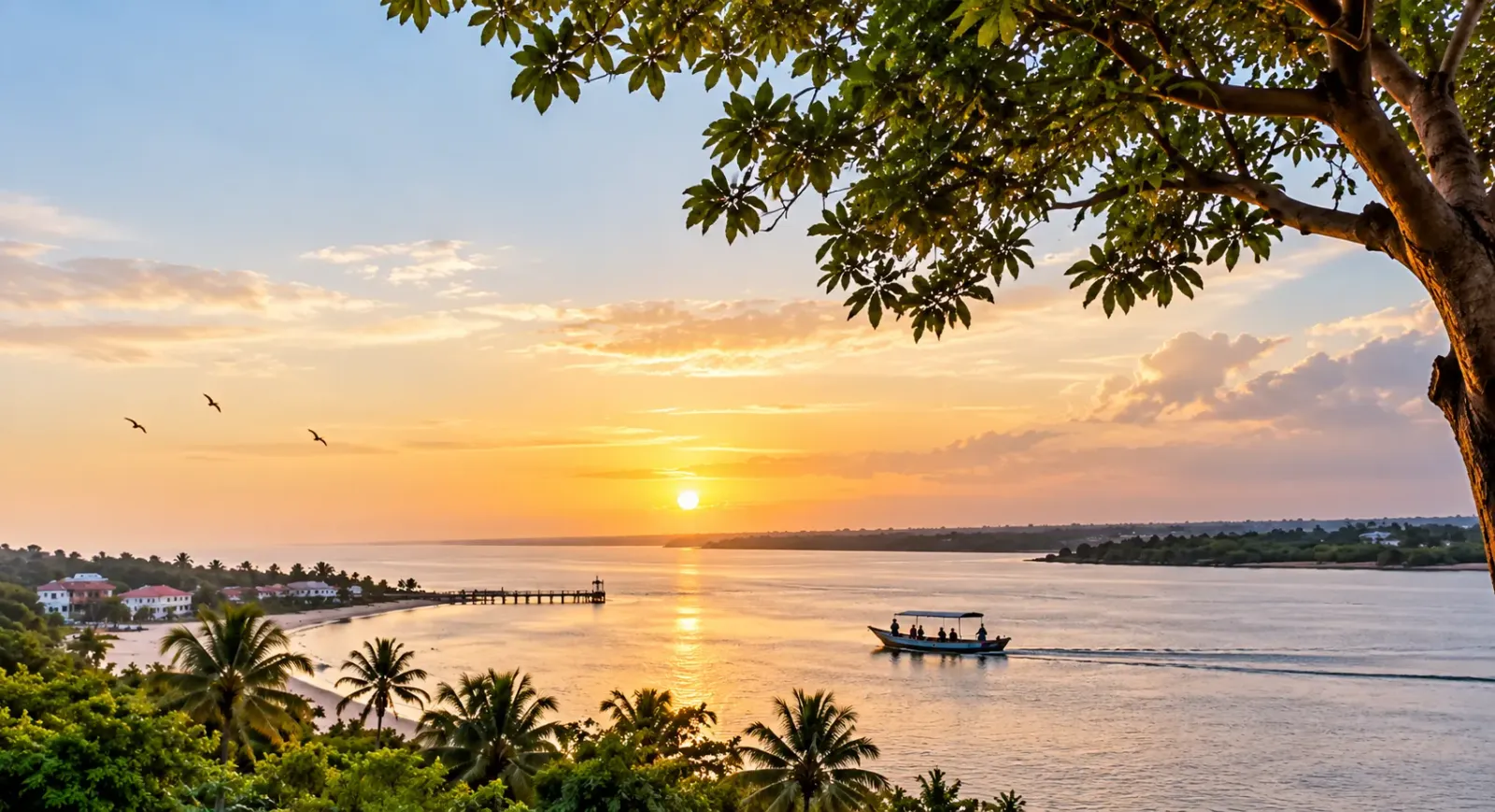
Life in The Gambia is closely connected to the river that gives the country its name. From the Atlantic coast, the country stretches inland along the River Gambia, which has shaped its communities, environment, history and economy.
For many visitors, one of the most memorable aspects of The Gambia is its people. Social interaction is an important part of everyday life, and conversations often begin with greetings and enquiries about family and wellbeing. Visitors should not be surprised when an interaction takes a little longer than expected.
The country combines busy urban areas, tourism communities, traditional villages, agricultural areas, wetlands, forests and hundreds of kilometres of river environment. A visitor who only experiences the coastal tourism area will therefore have seen only one part of The Gambia.
This guide has been prepared by the Office of the Honorary Consul of Hungary to The Gambia as a starting point for Hungarian citizens and other visitors who may be unfamiliar with the country.
More detailed guides on travelling to The Gambia, entry requirements, getting around, health and safety, business, culture, places to visit and consular assistance should be consulted alongside this introduction.
Questions and answers
Do I need a visa to visit The Gambia
Entry requirements depend on your nationality. Visitors should check the latest official requirements before travelling.
What language is spoken in The Gambia?
English is the official language. Wolof, Mandinka, Fula, Jola and Serahule are also widely spoken.
What currency does The Gambia use?
The national currency is the Gambian Dalasi (GMD).
Can I use euros or credit cards?
Some hotels, restaurants and supermarkets accept international cards, but cash is widely used. Exchanging currency through banks or authorised exchange bureaux is recommended.
Is The Gambia safe for visitors?
The Gambia is generally known for its welcoming atmosphere. Visitors should take normal travel precautions, keep valuables secure and follow local advice.
What is the weather like?
The Gambia has a warm tropical climate with a dry season and a rainy season. Lightweight clothing is suitable for most of the year.
What should I wear?
Casual clothing is acceptable in most places. Modest dress is appreciated when visiting religious sites or traditional communities.
Is tap water safe to drink?
Many visitors choose bottled or properly treated drinking water during their stay.
Can I communicate in English?
Yes. English is widely used in government offices, businesses, hotels and tourist areas.
How do I get around?
Taxis are widely available, and car hire is an option for visitors who wish to travel independently. Ferries also operate on parts of the River Gambia.
What electrical plugs are used?
The Gambia uses 230V electricity with Type G (British-style) plugs.
What mobile network should I use?
Local SIM cards are available at the airport and throughout the Greater Banjul Area from major telecommunications providers.
What food should I try?
Popular Gambian dishes include Benachin, Domoda, Yassa, Afra, and fresh seafood along the coast.
What are the must-visit places?
Highlights include Arch 22, Albert Market, Bijilo Forest Park, Kachikally Crocodile Pool, Tanji Fishing Village, the Atlantic beaches, and excursions along the River Gambia.
What should I know about Gambian culture?
Greetings are an important part of everyday life. Taking a moment to greet people politely is considered respectful and is appreciated throughout the country.
Where can Hungarian citizens seek assistance?
Hungarian citizens can contact the Office of the Honorary Consul of Hungary to The Gambia for local consular guidance and should also refer to the responsible Hungarian Embassy for formal consular services and emergencies.
Is Banjul the main tourist area?
Not generally. Banjul is the capital, while many hotels, restaurants and tourism services are located around Kololi, Kotu, Bijilo and neighbouring coastal areas.
Can I use euros or other foreign currencies?
The official currency is the Gambian dalasi. Some tourism businesses may quote prices in foreign currencies, but visitors should expect to use dalasi for normal everyday transactions.
Can the Honorary Consulate arrange my holiday?
No. The Honorary Consulate is not a tourism agency or travel operator. The website may provide general information and direct visitors towards appropriate official authorities and service providers.
Official sources
- Government of The Gambia — Official Government Portal
- Gambia Immigration Department — Visa & Immigration Information Official source for visas, immigration procedures and entry matters.
- Government of The Gambia — Entry Requirements
- Ministry of Tourism and Culture — The Gambia Government source for tourism and cultural institutions, including the Gambia Tourism Board and National Centre for Arts and Culture.
- World Health Organization — The Gambia Useful official international source for health information, country health data and public-health updates relevant to travellers.